Understanding Autism Spectrum

What autism spectrum actually is, how it presents across the lifespan, common misconceptions, and when clinical assessment makes sense.

A different way of processing the world

Autism spectrum condition (ASC) — also referred to as autism spectrum disorder (ASD) — is a neurodevelopmental condition characterised by differences in social communication and interaction, along with restricted or repetitive patterns of behaviour, interests, or sensory processing.

What autism actually involves

Autism is not a disease to be cured or a character flaw to be corrected. It is a fundamentally different way of perceiving and interacting with the world — one that brings both genuine challenges and, in many cases, distinct strengths.

The core challenges — in reading unspoken social rules, managing sensory environments, and coping with unexpected change — are real and can be significant. Assessment aims to understand the specific pattern for the individual and design practical support that addresses real needs.

Understanding autism spectrum

Three support levels in the autism spectrum (DSM-5)

DSM-5 defines three support levels based on the amount of support needed — not on ability. A person can be at Level 1 in one domain and Level 3 in another.

Level 1 — Requires support

Without support: noticeable difficulties in social communication. Low flexibility in response to change. Language ability typically good. Often diagnosed later — formerly called 'Asperger's syndrome'. May mask for years, with hidden consequences that accumulate.

Level 2 — Requires substantial support

Marked difficulties in verbal and non-verbal communication even with support. Evident repetitive behaviours. Significant distress from changes in environment or routine. Language delay more common. Without structured support, functioning is meaningfully limited.

Level 3 — Requires very substantial support

Severe deficits in communication; spoken language very limited or absent. Repetitive behaviours severely interfere with daily functioning. Extreme distress from change. Extensive support and care needed for daily activities.

How autism presents at different ages

Autism does not present identically across individuals or ages. How it looks in a young child is often quite different from how it presents in an adolescent or adult — particularly in girls and women who have learned to mask.

Infants and early childhood (0–2 years)

Reduced eye contact from around 6 months. Limited response to own name. Absence of reciprocal social smile. Delayed or absent imitative play. Concern if joint attention — pointing, following gaze — is absent by 12 months. M-CHAT-R/F screening at 16–24 months.

Preschool and school age (3–10 years)

Delayed or unusual speech development. Intense and narrow interests that absorb attention to an unusual degree. Strong distress at unexpected changes in routine or environment. Sensory sensitivities — under- or over-responsive to sounds, textures, light, or movement. Difficulty with peer play and unspoken social rules.

Adolescents (11–17 years)

Social difficulties become more obvious as peer relationships grow complex. Masking — deliberately imitating expected social behaviour. Deep exhaustion after social interactions. Difficulty with ambiguous communication and unwritten rules. Anxiety and depression as consequences of chronic masking. Girls: more likely to mask and be identified later.

Adults

Many have reached adulthood without a diagnosis. Autistic burnout — chronic exhaustion from long-term masking — is common. Difficulty in work environments with unwritten expectations and social demands. A diagnosis in adulthood can replace years of confusion and self-blame with a clear, accurate explanation.

Autism vs ADHD — key differences

Both are neurodevelopmental conditions and co-occur in 30–50% of cases. But their core mechanisms and support needs differ in important ways.

AutismADHD
Core difficultySocial communication and sensory processingAttention, impulsivity, executive function
Intense, narrow interests
Different sensory processingLess common
Distress from routine change
Social masking
Attention difficultiesSometimes secondary
Hyperactivity and impulsivity
Co-occurrence with the other30–50% also have ADHD30–50% also have autism

What autism is not

Several persistent myths prevent people from recognising autism in themselves or their children — and from seeking assessment.

"Autistic people lack empathy"
Many autistic people have profound empathy — they may feel others' distress intensely. The difference is often in how emotions are expressed or detected in others' faces and voices, not in whether empathy exists.
"You can't be autistic if you make eye contact"
Eye contact is a behaviour, not a diagnosis. Many autistic people learn to make eye contact deliberately — and report it as effortful rather than natural. Its presence does not rule out autism spectrum condition.
"Autism is always obvious"
Many autistic people — especially those with strong language skills and effective masking strategies — are not recognised until adolescence or adulthood. Subtle presentations are common, and the absence of obvious difficulty does not rule out significant internal struggle.
"Vaccines cause autism"
This claim originates from a single fraudulent study that was retracted and whose author lost his medical licence. Decades of large, rigorous studies involving millions of children have found no link between vaccines and autism.
"Girls don't get autism"
Girls are diagnosed at lower rates historically, but this reflects a diagnostic bias — not a genuine difference in prevalence. Girls more often mask effectively, making their difficulties less visible. The result is later identification and more accumulated harm before support begins.
"Nothing can help after early childhood"
Assessment and support are valuable at any age. For adults, a diagnosis can provide an explanation for lifelong experiences, reduce self-blame, and open access to appropriate accommodations and strategies.
Autism is a spectrum

The spectrum means wide variation — not a linear scale

"Spectrum" does not mean a line from mild to severe. It means that autism involves multiple dimensions — social communication, sensory processing, cognitive style, language development, and co-occurring conditions — each of which varies independently.

Someone can have profound strengths in one area and significant needs in another. A child who is non-speaking is not necessarily more impaired than an adult who talks fluently but cannot manage unstructured social situations. Assessment maps the actual profile rather than placing the person at a point on a line.

~1 in 100
children identified with autism spectrum condition
Prevalence estimates continue to rise as identification improves.
~70%
of autistic people have at least one co-occurring condition
ADHD, anxiety, and learning differences are the most common.
3–5 years
average gap between first concerns and formal diagnosis
Longer in girls, adults, and those with subtler presentations.

How autism is diagnosed

Autism diagnosis is clinical and relies on behavioural observation, structured interview, and standardised tools. No blood test or genetic test alone diagnoses autism.

Standard tools: M-CHAT-R/F for screening infants aged 16–24 months. ADOS-2 (Autism Diagnostic Observation Schedule) — the gold-standard behavioural observation instrument. ADI-R (Autism Diagnostic Interview) — a structured interview with parents. CARS (Childhood Autism Rating Scale) — a clinician-rated scale for children.

A comprehensive assessment typically involves a specialist team including a child and adolescent psychiatrist or clinical psychologist, speech-language therapist, and occupational therapist. Information from parents, teachers, and direct observation is combined to build a complete picture.

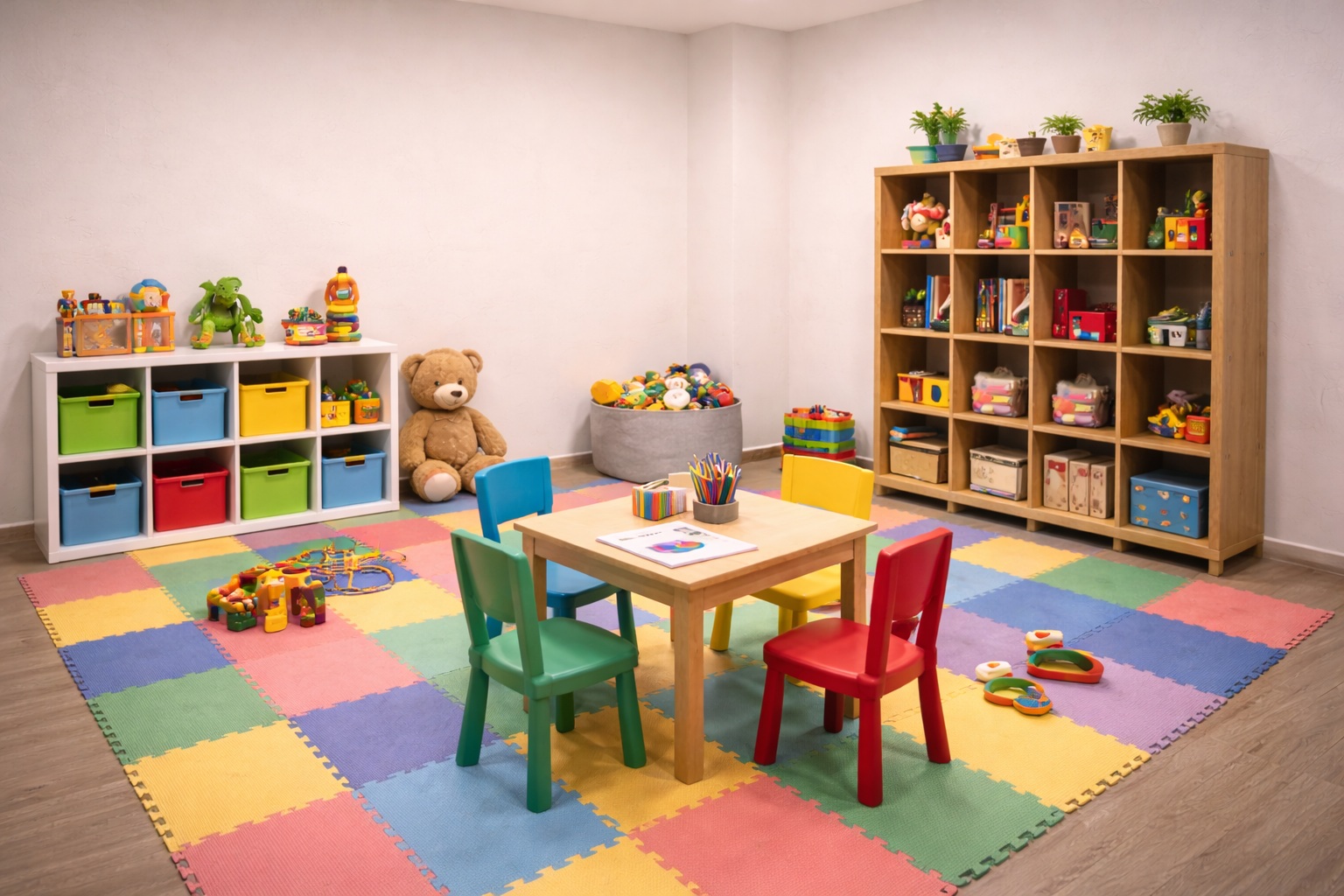
Autism assessment

Interventions and support for autism

The goal of intervention is to reduce real challenges, build on strengths, and improve quality of life — not to 'cure' autism. Early intervention produces better outcomes.

Behavioural interventions

ABA (Applied Behaviour Analysis) and EIBI (Early Intensive Behavioural Intervention) for young children have the strongest research evidence. More naturalistic approaches such as ESDM and PRT build on the child's interests. Early intervention (before age 5) produces better outcomes.

Speech-language and occupational therapy

Speech therapy: developing verbal and non-verbal communication; PECS for children with limited speech. Occupational therapy: sensory integration, self-care skills, school readiness. Both must be tailored to each person's specific needs.

Social skills and family support

Social skills groups for adolescents and adults. Parent training to generalise skills to the home setting. Psychological support for the autistic individual — particularly for managing anxiety, burnout, and self-concept.

Autism in school

Autism in school and educational settings

Autism does not automatically mean special education. Many autistic children succeed in mainstream schools with appropriate support. The decision should be based on the specific profile of the child — not on the diagnosis alone.

Effective classroom accommodations: a structured daily schedule with advance warning before transitions. A calm environment with reduced sensory overload. Clear and explicit instructions rather than implied. Sensory breaks when needed. An individual support plan (IEP/EHCP) developed with parents and specialists.

Autism does not determine intelligence. Many autistic people have exceptional ability in specific domains. A knowledgeable teacher who understands autism can make an enormous difference to a child's educational journey.

Conditions that commonly co-occur with autism

Autism rarely occurs without other conditions. Understanding what co-occurs is essential for accurate assessment and a care plan that actually addresses the person's full needs.

ADHD

ADHD and autism co-occur in 30–50% of cases. Current diagnostic frameworks recognise that both can be present simultaneously. When they co-occur, both need to be assessed and addressed — treating only one often leaves significant difficulties unresolved.

Anxiety disorders

Anxiety is extremely common in autistic people — often a consequence of the constant effort required to navigate a world not designed for their processing style. Social anxiety, generalised anxiety, and specific phobias are all significantly more prevalent.

Learning differences

Dyslexia, dyscalculia, and other specific learning differences occur at higher rates in autistic individuals. Uneven cognitive profiles — exceptional ability in some areas alongside significant difficulties in others — are characteristic and inform educational planning.

Depression and burnout

Depression is significantly more common in autistic people, particularly in adolescence and adulthood. Autistic burnout — a state of chronic exhaustion from prolonged masking and sensory overload — is a distinct phenomenon that can resemble depression but requires different responses.

Articles on autism spectrum

For a deeper look at specific aspects of autism spectrum, explore the specialist articles below.

What is autism?

Symptoms, diagnosis, and treatment of autism spectrum condition — the complete guide.

Autism explained

Everything you need to know for your child's future — a guide for parents.

Autism treatment

The latest approaches to autism intervention in 2026 — from ABA to newer naturalistic models.

Autism in adulthood

Symptoms, challenges, and modern approaches to supporting autistic adults.

Autism in women and girls

Why so many girls go undiagnosed for years — a comprehensive guide.

AuDHD — autism and ADHD together

A comprehensive look at the co-occurrence of autism and ADHD — what is it like to have both?

Common questions about autism spectrum

What is the difference between autism and Asperger's syndrome?

Asperger's syndrome is no longer a separate diagnostic category in current diagnostic frameworks (DSM-5 and ICD-11). It has been merged into the single category of autism spectrum condition. People previously diagnosed with Asperger's are now described as autistic individuals, typically with strong language development and average or above-average intellectual ability — but the underlying condition is the same.

Can adults be assessed for autism if they were not identified in childhood?

Yes — and this is increasingly common. Many adults, particularly women and those with higher intellectual ability, were never identified because they masked effectively or because the diagnostic criteria of the time were modelled on hyperactive boys. Adult assessment reviews developmental history alongside current functioning and is fully valid regardless of age.

Why are girls and women diagnosed with autism so much later?

Research shows that girls are more likely to mask — to observe and imitate expected social behaviour, suppressing visible signs of difference. Girls are also more likely to develop intense social motivation that partially compensates for underlying difficulties. The result is that identification often does not happen until secondary school, university, or adulthood — by which point significant anxiety and exhaustion may have accumulated.

Is autism genetic?

Autism has a strong genetic component — heritability estimates are around 64–91% based on large twin studies. However, genetics alone do not fully explain it; environmental factors during early brain development also contribute. Crucially, vaccines, poor parenting, and diet do not cause autism. The original vaccine-autism claim came from a fraudulent, retracted study.

Can autistic people have full lives, relationships, and careers?

Yes. Many autistic people have fulfilling relationships, meaningful work, and rich lives — often in environments that suit their processing style and with support that fits their actual needs. A diagnosis is not a ceiling. It is a description of a cognitive and sensory profile, not a prediction of what a person can achieve.

Does autism need to be "treated" or "cured"?

Autism is not a disease to be cured. The goal of assessment and support is to reduce genuine difficulties — sensory overload, anxiety, communication barriers, social exhaustion — and to build on strengths. Interventions aimed at making someone appear less autistic (rather than addressing actual distress) are not appropriate goals. Support should serve the individual's wellbeing and autonomy.

What does a formal autism assessment involve?

A comprehensive autism assessment includes a detailed developmental and personal history interview, standardised assessment tools such as the ADOS-2 (Autism Diagnostic Observation Schedule) and ADI-R (Autism Diagnostic Interview-Revised), observation of behaviour, and — especially in children — input from parents and school. The assessment service page describes the specific pathway used at Farasai Clinic.

Can autism and ADHD be present at the same time?

Yes. ADHD and autism spectrum condition co-occur in 30–50% of cases. Earlier diagnostic manuals precluded diagnosing both simultaneously, but current frameworks recognise this is common and clinically important. When both are present, assessment needs to carefully distinguish which difficulties belong to which condition — because the management approaches differ and both need to be addressed.

If my child has autism, do they need a special school?

Not necessarily. Autism spectrum includes very different profiles and capabilities. Many autistic children succeed in mainstream schools with appropriate support. The decision about educational placement should be based on the child's specific needs, the school's capacity to provide support, and specialist team recommendations — not solely on the diagnosis.

Are parents responsible for causing autism?

No. Autism has a strong genetic basis — heritability estimates of 64–91%. Parents have no causal role in their child's autism. Vaccines, parenting style, or the home environment do not cause autism. The vaccine-autism claim came from a fraudulent study that was retracted, and its author lost his medical licence.

What is autistic burnout?

Autistic burnout is a state of profound mental, physical, and emotional exhaustion resulting from sustained masking and sensory overload. It can look like depression but is driven by the chronic effort of navigating a neurotypical world. Recovery typically requires reducing demands, lowering masking effort, and creating more autistic-friendly environments — not simply treating a mood disorder.

Ready to explore assessment?

The autism assessment service page explains the clinical pathway, what each step involves, and how care is structured at Farasai Clinic.

See the autism assessment pathway

Phone and WhatsApp are currently the fastest way to coordinate an appointment.